.svg)

Drones in Farming: How Aerial Technology is Changing Agriculture
What Are Agricultural Drones?
Agricultural drones are unmanned aerial vehicles specifically designed or adapted for use in farming environments. Equipped with high-resolution cameras, multispectral sensors, and GPS systems, these drones can cover large areas of farmland quickly and collect detailed data that would take days to gather on foot. They are used across a growing range of tasks, from crop scouting and disease detection to precision spraying and field mapping.
Crop Monitoring from Above
One of the primary uses of agricultural drones is real-time crop monitoring. By flying over fields at regular intervals, drones capture imagery that reveals variations in crop health, soil moisture, and plant density across different zones. Farmers can use this data to identify areas of stress, drought, or disease early — allowing targeted interventions rather than blanket treatments across the entire field.
Precision Spraying and Input Application
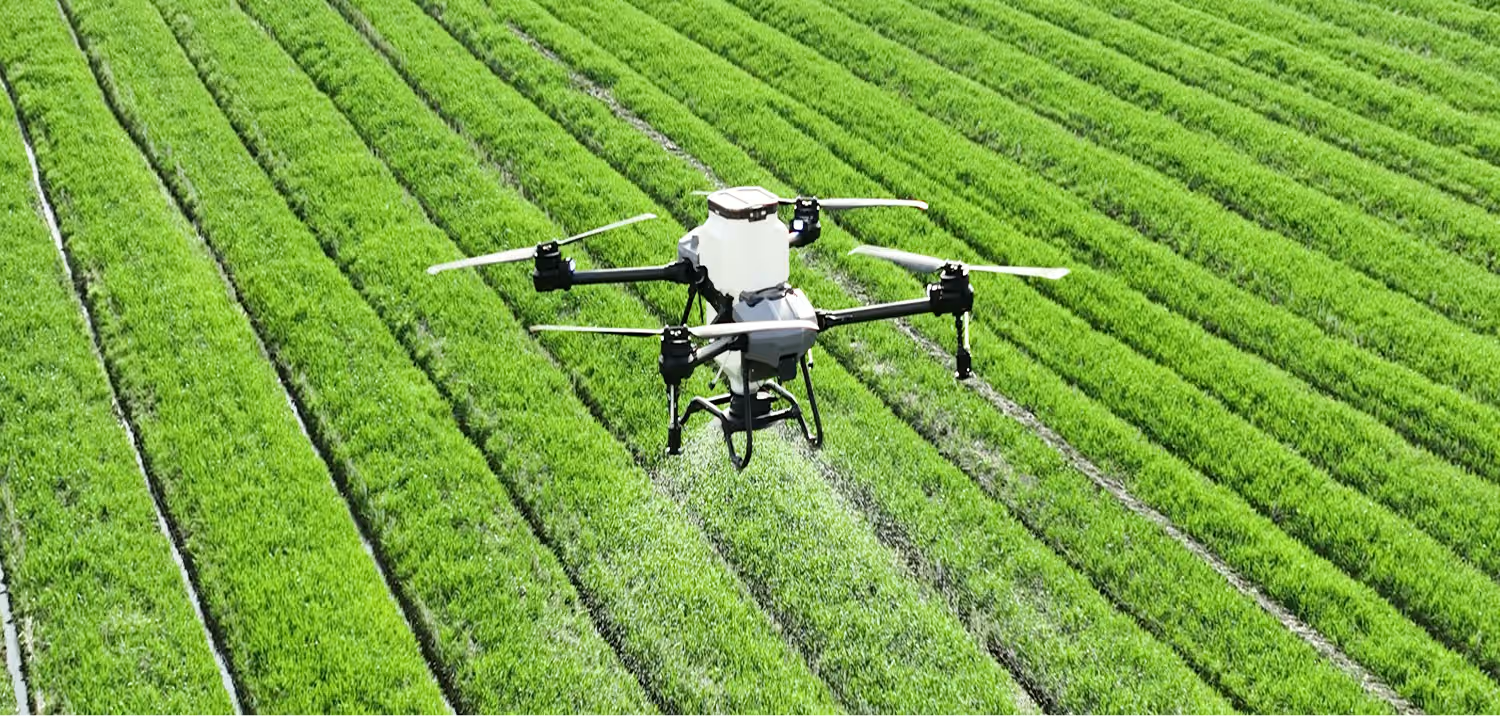
Drones equipped with spraying systems can apply pesticides, herbicides, and liquid fertilizers with a level of precision that ground-based equipment cannot match. Because drones operate at low altitudes and can navigate around obstacles, they reduce chemical drift and ensure that inputs land exactly where they are needed. Studies have shown that drone spraying can reduce pesticide use by up to 30% compared to conventional methods while achieving equal or better coverage.
Field Mapping and Soil Analysis
Before a crop is even planted, drones can be used to create detailed three-dimensional maps of a field. These maps capture elevation data, drainage patterns, and soil variability — information that informs planting strategies, irrigation system design, and fertilizer plans. Combined with soil sampling, drone-generated maps give farmers a comprehensive picture of their land that supports more informed decision-making throughout the growing season.
Benefits for Modern Farmers
The advantages of agricultural drones extend well beyond data collection. They dramatically reduce the time needed to scout large fields, allow farmers to spot problems before they escalate, and enable more precise use of inputs that directly reduces operational costs. Drones also reduce physical labor demands and improve safety by eliminating the need for manual application of chemicals in hazardous conditions.
Barriers to Adoption
Despite their clear potential, drones face adoption challenges in agriculture. Regulatory requirements around drone operation vary by country and can limit where and how they are used. Battery life and payload capacity remain technical constraints, particularly for large-scale farms. The upfront investment in drone hardware and software can also be significant, though costs have fallen substantially over the past several years as the technology has matured.
The Future of Drones in Agriculture
The next generation of agricultural drones will be faster, smarter, and more autonomous. AI-powered navigation will allow drones to plan and execute missions independently, adapting in real time to field conditions. Swarm technology — where multiple drones coordinate to cover large areas simultaneously — is already being tested and will become commercially viable in the near future. As integration with farm management platforms deepens, drones will become a central component of the connected, data-driven farm.
Conclusion
Agricultural drones have moved from experimental technology to a practical tool that is actively reshaping how farmers monitor, manage, and optimize their fields. As the technology continues to evolve and become more accessible, drones will play an increasingly important role in helping agriculture meet the demands of a growing global population with fewer resources and greater precision.
