.svg)

Smart Irrigation Systems: Saving Water & Boosting Productivity

Why Irrigation Efficiency Matters
Water is one of the most critical and increasingly scarce resources in agriculture. Traditional irrigation methods — flood irrigation, fixed-schedule sprinkler systems, and manual watering — waste significant volumes of water by applying it uniformly regardless of what individual crops or soil zones actually need. As climate change intensifies drought conditions in many farming regions, the pressure to use water more efficiently has never been greater.
What Is a Smart Irrigation System?
A smart irrigation system is an automated water management solution that uses sensors, weather data, and control software to deliver precise amounts of water to crops based on real-time conditions. Rather than operating on a fixed schedule, smart systems continuously monitor soil moisture, temperature, humidity, and evapotranspiration rates — adjusting irrigation cycles dynamically to match the actual needs of the crop at any given time.
Core Components of Smart Irrigation
Smart irrigation systems are built around several key technologies working together. Soil moisture sensors placed at different depths across the field provide continuous data on water availability at the root zone. Weather station integrations pull in local forecasts and current atmospheric conditions to prevent unnecessary irrigation before or after rainfall. Central control units — often accessible via mobile app or web dashboard — allow farmers to monitor and adjust the entire system remotely without needing to be physically present in the field.
Water Savings and Efficiency Gains
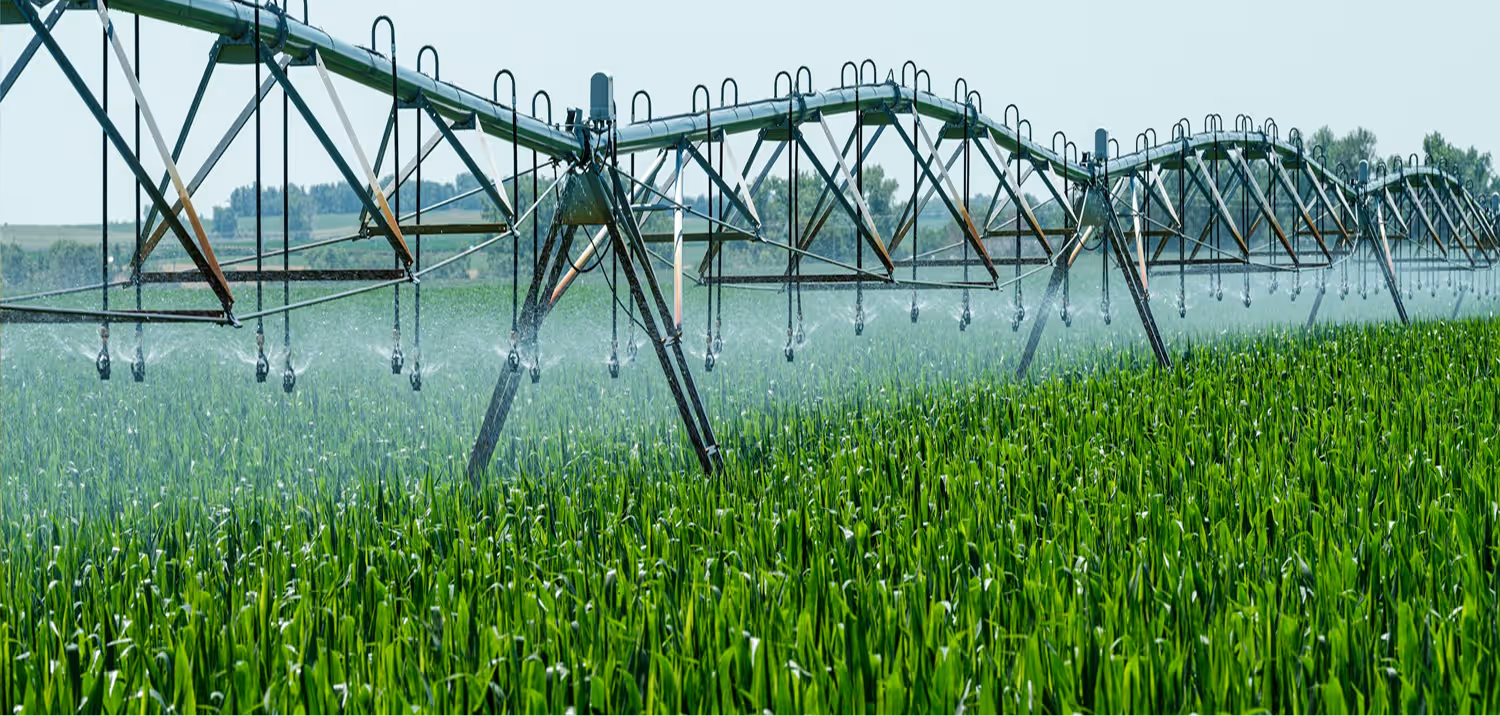
The efficiency improvements delivered by smart irrigation are well documented. Farms that have adopted sensor-based irrigation systems report water savings of between 30% and 50% compared to conventional methods, depending on crop type and local climate. These savings translate directly into lower water bills, reduced pumping energy costs, and less strain on local water supplies — benefits that compound significantly over multiple growing seasons.
Impact on Crop Health and Yields
Beyond water conservation, smart irrigation has a direct positive effect on crop health. Over-irrigation leaches nutrients from the soil, promotes root disease, and creates anaerobic conditions that limit plant growth. Under-irrigation causes stress that reduces yield and makes crops more vulnerable to pests. Smart systems maintain optimal soil moisture levels consistently, creating the conditions for steady, healthy growth throughout the entire season.
Challenges in Implementation
Transitioning to smart irrigation requires an upfront investment in sensors, controllers, and connectivity infrastructure. For farms without reliable internet or power access, installation can be technically challenging. Calibration of sensors to specific soil types and crop requirements also takes time and expertise to get right. However, the long-term cost savings in water, energy, and crop losses typically outweigh the initial investment within two to three growing seasons.
The Future of Irrigation Technology
The next phase of smart irrigation will see deeper integration with AI-driven farm management platforms, enabling predictive irrigation scheduling based on crop growth models and long-range weather forecasts. Satellite-based soil moisture mapping will allow system recommendations to cover entire farm operations from a single dashboard. As hardware costs continue to fall and wireless sensor technology improves, smart irrigation will become a standard practice across all scales of commercial agriculture.
Conclusion
Smart irrigation systems represent one of the most practical and immediately impactful investments a farmer can make. By combining sensor technology, automation, and data-driven decision-making, these systems help farmers produce more with less — protecting water resources, improving crop yields, and building a more sustainable foundation for agricultural operations in the years ahead.
